Guides
The Difference Between Asset Finance and Leasing
Asset finance is the umbrella term for funding that is secured on the equipment itself. Leasing is one route within that umbrella, where the funder keeps legal title and the business pays to use the asset. Hire purchase, the other main route, is structured so that ownership transfers to the business once all payments and any option-to-purchase fee have been made.

In this article
- Asset finance is the category, leasing is one option inside it
- When ownership genuinely matters
- Cost comparison: what to look at instead of the monthly figure
- Tax and accounting, in outline
- How to decide on a real purchase
- Five common purchases and which route usually fits
- Balance sheet, covenants and how the choice is seen by others
- Questions that expose the real difference in a quotation
- Useful independent sources
- Related reading
- Frequently asked questions
- Is leasing a type of asset finance?
- Which is cheaper, hire purchase or leasing?
- Can I own the equipment at the end of a lease?
- Does asset finance always need a deposit?
- The next step
What is the difference between asset finance and leasing?
Asset finance is the umbrella term for funding that is secured on the equipment itself. Leasing is one route within that umbrella, where the funder keeps legal title and the business pays to use the asset. Hire purchase, the other main route, is structured so that ownership transfers to the business once all payments and any option-to-purchase fee have been made.
People use the words asset finance and leasing as if they mean the same thing. They do not. The distinction changes who owns the machine, how it appears in your accounts, what happens at the end of the term and, in some cases, how the cost is treated for tax. This guide sets the difference out plainly for UK business users, then shows how to pick between the two on a real purchase.
This article supports our longer pillar guide, what asset finance is, which covers the whole subject from definitions to end of term.
Asset finance is the category, leasing is one option inside it
Asset finance describes any arrangement where a funder advances money against a specific asset and takes comfort from that asset. Within it sit hire purchase, finance lease, operating lease, contract hire and asset refinance. Leasing refers only to those structures where the funder retains ownership and rents the asset to your business for an agreed period.
That is why the honest answer to "asset finance or leasing?" is usually "which type of asset finance?". The useful question is whether you want to end up owning the machine.
| Point | Hire purchase | Lease |
|---|---|---|
| Legal owner during the term | Funder, with ownership passing at the end | Funder throughout |
| End of term | You own the asset after the option fee | Return, extend, or sell as agent depending on the lease type |
| Balance sheet | Usually shown as an asset and a liability | Depends on the lease type and accounting standard used |
| VAT on the equipment | Generally payable up front on the asset price | Generally charged on each rental |
| Best suited to | Long-life equipment you intend to keep | Equipment replaced on a planned cycle |
Treat the table as orientation, not advice. The precise VAT and accounting treatment depends on the agreement wording and your own circumstances, so confirm it with your accountant.
When ownership genuinely matters
Ownership matters when the machine holds value that you expect to realise. A well-maintained tractor, a compact excavator or a high-specification trailer can be worth a meaningful share of its original price after five years. If you plan to run the asset well beyond the agreement, hire purchase usually gives the better lifetime outcome because you stop paying once the term ends.
Ownership matters less where the asset dates quickly, needs to be current for contract reasons, or carries a servicing burden you would rather hand back. Technology, some commercial vehicles and fine-turf mowing fleets often sit in that group.
There is also a practical point on resale. Owning the machine means you choose when to sell and who to sell it to. Under a lease, the funder's process governs disposal, even where the lease allows you to act as their agent in a sale.
Cost comparison: what to look at instead of the monthly figure
Two quotes with the same monthly payment can differ by thousands over a term. Compare total payable, not the instalment. Add the deposit, every rental, any documentation fee, the option-to-purchase fee where one applies and the end-of-term position.
- Deposit or initial rental: how much cash leaves the business on day one.
- Term: a longer term lowers the payment and raises total cost.
- Balloon or residual: a large final payment makes the monthly figure look better than the deal is.
- End position: do you own an asset at the end, or hand it back with nothing?
- Fees: arrangement, documentation and option fees should be disclosed in writing.
A simple discipline works well. Write down total payable for each option, then divide by the number of productive months you expect from the asset. That gives a cost per working month you can compare honestly.
Tax and accounting, in outline
Under hire purchase, the business is usually treated as buying the asset, so capital allowances may be available on the capital cost and the interest element is usually deductible as a business expense. Under a lease, rentals are generally treated as an operating cost, with restrictions in some cases, for example cars above certain emissions thresholds.
Both routes can be sensible. The mistake is choosing a structure purely for a presumed tax result, then discovering it does not fit how the asset earns. HMRC guidance on capital allowances is the right starting point, and your accountant should confirm the treatment for your business before you sign.
How to decide on a real purchase
Work through five questions in order.
- How long will this asset genuinely earn for the business?
- Do I want to own it at the end, or replace it on a cycle?
- How much cash must stay in the business this quarter?
- Does the income from the asset arrive evenly, or seasonally?
- What is the total payable under each structure, including fees?
If the answers point to long life and retention, hire purchase is normally the stronger fit. If they point to planned replacement, predictable budgets and a preference to hand equipment back, a lease usually wins. Where income is seasonal, ask about seasonal payment structures before you accept a flat monthly profile.
Five common purchases and which route usually fits
Theory only goes so far. These are the patterns we see most often on British purchases between £5,000 and £5 million.
A 120hp tractor kept for ten years. Hire purchase almost always wins. The machine will still be worth a substantial sum when the agreement ends, the business wants that value on its own balance sheet, and payments stop while the tractor keeps working. Our tractor finance guidance covers the detail.
A fairway mower fleet replaced every four years. Leasing usually fits better. The club wants current machines, predictable budgeting and no disposal risk, and the funder is comfortable with the residual value because fine-turf equipment has a reliable second-hand market.
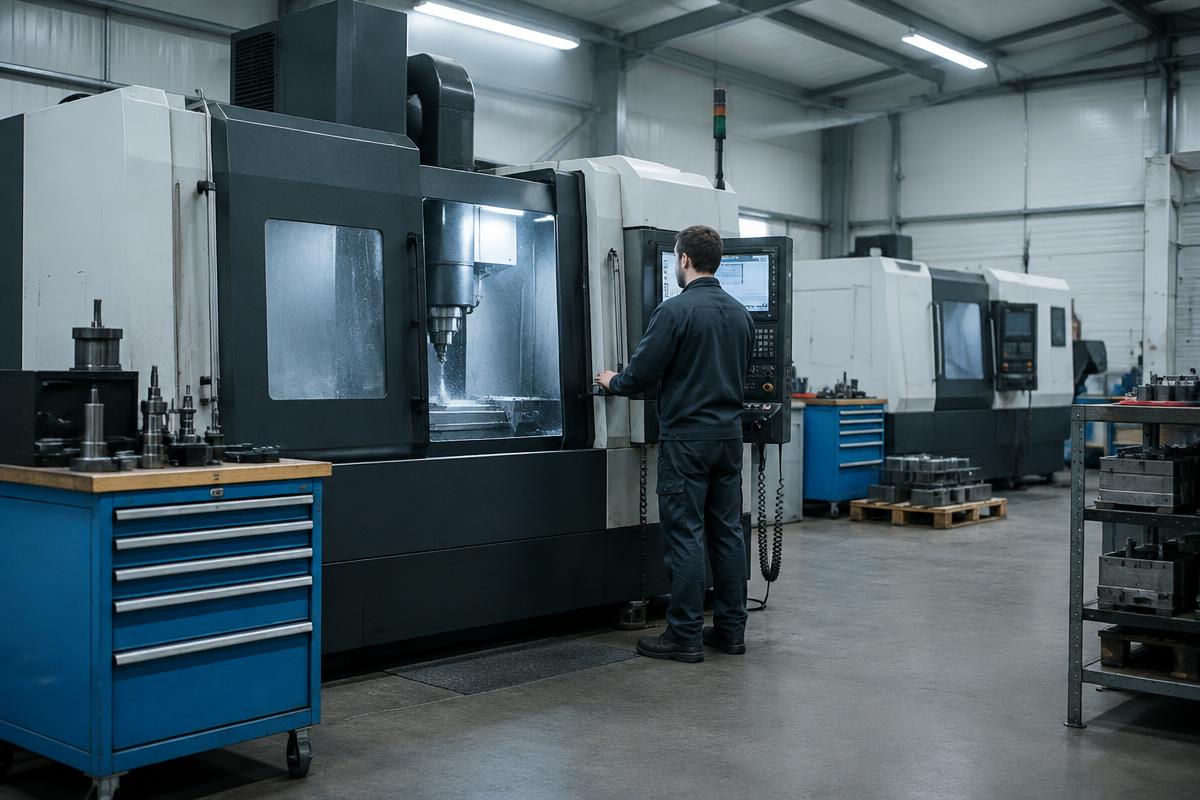
A CNC machining centre installed over three months. Either route can work, but the structure matters more than the label. Staged payments to the supplier, a commissioning date that starts the term, and a term matched to the tooling programme are the points to negotiate.
A van for a two-person business. Contract hire suits a business that wants a fixed monthly cost including maintenance. Hire purchase suits one that racks up high mileage, because mileage charges on a hire agreement can outweigh the saving.
A second-hand excavator bought at auction. Hire purchase is the usual answer. Funders want title certainty and a clear valuation, and the buyer normally intends to keep the machine. Read our note on financing used machinery bought at auction before bidding, because payment deadlines at auction are short.
Balance sheet, covenants and how the choice is seen by others
Beyond cost, the two routes present differently to anyone reading your accounts. Hire purchase and finance leases usually appear as an asset with a matching liability, which increases both sides of the balance sheet and can affect gearing ratios. Operating leases have historically sat off balance sheet under UK GAAP, with the rentals shown as an expense.
That presentation matters in three situations. If you have bank covenants tied to gearing or interest cover, adding a large hire purchase liability can move you closer to a limit. If you tender for work where financial scoring is applied, a stronger asset base can help. If you are preparing the business for sale or investment, buyers look closely at owned plant against contracted rental commitments.
None of this makes one route better. It makes it worth asking your accountant how a particular structure will appear before you commit to a large facility, rather than explaining it at the year end.
There is a human factor too. Owning machinery outright changes how a business behaves. Owners often keep machines longer, maintain them more carefully and take more interest in resale values. Businesses that lease tend to run tighter replacement discipline. Neither habit is wrong, but it is worth knowing which one suits your operation.
Questions that expose the real difference in a quotation
When two proposals land, the wording rarely makes the difference obvious. These questions do.
- At the end of this agreement, who owns the asset, and what do I have to pay to own it?
- What is the total payable, including deposit, all payments and every fee?
- If I want to settle in year three, how is the figure calculated?
- Is there a return condition standard, and can I see it now?
- Is there a usage limit in hours or miles, and what is the excess charge?
- Who holds the capital allowances under this structure?
- Is VAT charged on the asset at the start or on each payment?
- Can payments be shaped around a seasonal income pattern?
A good funder or broker answers all eight without hesitation and puts the answers in writing. If any of them produce a vague reply, that is the item to pin down before signing.
Useful independent sources
These organisations publish the underlying rules and market information referred to above.
- Financial Conduct Authority register: check that any broker or lender holds the permissions it claims.
- Finance and Leasing Association: UK asset finance market data and the industry lending code.
- National Association of Commercial Finance Brokers: broker standards and member directory.
- GOV.UK capital allowances: what qualifies and how relief is claimed.
- Bank of England Bank Rate: the policy rate that influences funders' cost of money.
- British Business Bank finance hub: impartial guidance on business funding options.
Related reading
- What is asset finance? The complete UK guide
- Equipment Leasing in the UK: A Practical Guide
- End of Lease Options: What Happens When the Term Finishes
- How the application process works
- Asset finance glossary
Frequently asked questions
Is leasing a type of asset finance?
Yes. Leasing is one structure within asset finance, alongside hire purchase, contract hire and asset refinance.
Which is cheaper, hire purchase or leasing?
Neither is automatically cheaper. Hire purchase often costs less across the full life of an asset you keep, while leasing can cost less over a short replacement cycle. Compare total payable and the end-of-term position.
Can I own the equipment at the end of a lease?
Not usually in the way you would under hire purchase. Some finance leases allow the business to sell the asset as the funder's agent and retain most of the proceeds, but title does not transfer automatically. Check the agreement.
Does asset finance always need a deposit?
No. Deposits vary with the asset, the term and the strength of the proposal. Some agreements are written with no deposit, others with an initial rental of one to three payments.
The next step
Send the supplier quotation, the delivery date and a short note on how the asset will be used. Buckingham Leasing can then set out the realistic structures and approach suitable funders. Facilities from £5,000 to £5 million are considered, subject to status. Speak to the team or read more in our asset finance guide.
Finance disclosure: Buckingham Leasing Ltd is a finance broker, not a lender. Finance is subject to status and approval. Business users only. Applicants must be aged 18 or over and based in the UK. Figures are illustrative and are not quotations, tax advice or financial advice. Tax and accounting treatment depends on individual circumstances and may change.