Farming · Finance guide
Tractor Finance Deals and Tractor Financing in the UK
By Jack Bridges, Director of Buckingham Leasing
A practical guide to new and used tractor costs, hire purchase, leasing, auction buying, approval and the documents funders assess.

In this article
- Start with the business decision
- Who tractor financing suits
- Replace, add or keep the old tractor
- Costs, value and useful life
- New or used tractor: what changes for finance
- Hours, age and resale value
- Compare every realistic funding route
- Dealer finance or a broker
- Ownership at the end of the agreement
- How approval works
- Seasonal repayments that follow farm income
- What funders ask about the tractor itself
- Documents and preparation
- Pre-application checklist
- Deposits and part-exchange
- Buying privately or at auction
- Tax, capital allowances and VAT
- VAT on a financed tractor
- Capital allowances by route
- Common mistakes and practical checks
- Used tractor checks before you sign
- Dealer offers: read the whole deal
- Tractor financing explained in plain terms
- Why farms finance tractors rather than paying cash
- Who provides tractor finance
- Types of tractor finance compared
- Hire purchase for tractors
- Balloon payments
- Finance lease
- Operating lease and contract hire
- Asset refinance for tractors you already own
- Financing new and used tractors
- New tractors
- Used tractors from a dealer
- Used tractors from a private seller
- Auction tractors
- How age and hours affect the term
- Finance by type of tractor
- Compact and sub-compact tractors
- Utility and livestock tractors
- High-horsepower arable tractors
- Specialist and orchard tractors
- Loaders, implements and attachments
- Finance for popular tractor brands
- Kubota
- John Deere
- New Holland, Case IH, Massey Ferguson, Fendt, Claas and others
- What tractor finance costs and what affects it
- What affects your rate
- Total amount payable
- Fees to ask about
- Insurance and running costs
- Deposits, part-exchange and zero deposit tractor finance
- How much deposit is typical
- Using your old tractor as the deposit
- Zero deposit tractor finance
- Keeping a cash reserve
- Seasonal and flexible repayment profiles
- Common payment patterns
- What funders need to see
- Seasonal payments and VAT
- Dealer finance versus a broker: how to compare
- Strengths of dealer finance
- Strengths of a broker
- What to compare
- What happens at the end of a tractor finance agreement
- End of hire purchase
- End of a finance lease
- End of an operating lease or contract hire
- Settling early
- Who can apply for tractor finance
- Established farms and estates
- Agricultural contractors
- New farming businesses
- Smallholdings and rural businesses
- Groundscare, golf and sports turf
- How to apply for tractor finance, step by step
- How long it takes
- Documents you may need
- Tax, VAT and accounting points to discuss with your accountant
- Hire purchase
- Leasing
- Where to check
- Mistakes to avoid when financing a tractor
- Tractor finance across Buckinghamshire and the UK
- Why farms and contractors use Buckingham Leasing
- Related farm finance guides
- Quick answers on tractor financing
- What is tractor financing?
- Can I finance a used tractor?
- Can tractor finance payments be seasonal?
- Is dealer finance or broker finance better?
- Do I own the tractor at the end?
- Can a new farming business get tractor finance?
- Tractor finance for agricultural contractors
- Matching finance to contracts
- High hours and replacement cycles
- Fleet finance
- Planning tractor replacement on a farm
- Signs a tractor is due for replacement
- Spreading replacements over time
- Keep, sell or trade in
- Finance for tractor technology, GPS and newer power options
- GPS guidance and precision farming
- Telematics and data
- Alternative fuels and electric tractors
- Insurance, maintenance and looking after a financed tractor
- Insurance
- Servicing
- If something goes wrong
- Tractor finance checklist before you buy
- Regulation and how we work
- Tractor finance glossary
- Tractor finance for estates, equestrian yards and rural diversification
- Showing business use
- Diversification projects
- Compact tractors with attachments
- What to expect when you talk to us about a tractor
- Frequently asked questions
- How much deposit is normally needed?
- Can a new business apply?
- Can used equipment be financed?
- How quickly can approval be arranged?
- Can payments follow seasonal income?
- Can the agreement be settled early?
- What happens to VAT?
- Is Buckingham Leasing the lender?
- A sensible next step
- What to send us
- Choosing between your tractor financing options
- Related reading
- Related reading
UK arable, livestock and mixed farms replacing or expanding tractor capacity usually begin with a practical pressure: capacity is short, current equipment is unreliable, a contract is starting or a long-planned investment has reached decision point. Illustrative UK prices range from about £25,000 for an older utility tractor to more than £250,000 for a new high-horsepower model with advanced specification. The question is how to fund a sound purchase without weakening the rest of the operation.
Direct answer: Tractor financing lets a farm, contractor or estate spread the cost of a new or used tractor over a set term instead of paying the full price at once. The main options are hire purchase, where you own the tractor after the final payment, and leasing, where you use it for an agreed period and then hand it back, extend or replace it. It suits businesses that need the machine now, want to keep cash for seed, feed and wages, or earn their income in seasonal peaks. Finance is for business users only and is subject to status.
Key takeaways
- Start with the commercial need, not the finance product.
- Compare ownership, security, total payable and end position.
- Use conservative figures and retain operating cash.
- Prepare the quote, accounts, bank statements and asset evidence early.
- Confirm tax and VAT treatment with your accountant.
Contents
- Start with the business decision
- Costs, value and useful life
- Compare every realistic funding route
- How approval works
- Documents and preparation
- Tax, capital allowances and VAT
- Common mistakes and practical checks
- Frequently asked questions
- A sensible next step
Start with the business decision
Who it suits: Tractor finance usually fits established farms replacing a main tractor, contractors adding capacity for a new contract, smallholdings and estates buying a compact model, and newer farming businesses that can show a clear plan for the machine. The right structure depends on whether you want to own the tractor long term, how many hours it will do and when your money comes in during the year.
Who tractor financing suits
Most tractor finance enquiries come from one of four places. An arable or mixed farm is replacing a main tractor that is costing more in repairs than it is worth. A contractor has won extra work and needs another unit before the season starts. A smallholding or estate wants a compact tractor for mowing, loader work and general jobs. A new farming business needs a reliable machine but has little trading history. Each case can be financed, but funders look at them differently. A long-running farm with accounts is assessed mainly on affordability. A contractor is assessed on the strength of the work behind the purchase. A newer business is assessed on experience, deposit and the quality of the machine. Knowing which of these you are helps us go to the right funder first.
Replace, add or keep the old tractor
Before choosing a finance route, decide what happens to the current tractor. Trading it in can reduce the amount you borrow and act as your deposit. Keeping it as a second unit gives you cover for breakdowns and busy weeks, but you then carry two sets of insurance and servicing. Selling it privately may raise more than a trade-in, though it takes time and the timing must line up with delivery of the new machine. If the old tractor is still under finance, the settlement figure needs to be known before you agree a deal, because it affects how much equity you really have.
Keep the assumptions dated and attributable. Supplier guidance, actual utilisation, recent accounts and written project estimates are stronger than broad claims. Market prices, approval appetite and agreement terms change, so current written figures must be obtained before a decision.
If you are weighing up a second-hand machine, our guide to used tractor finance in the UK covers age, hours and what funders look for. For the wider farm picture, see agricultural leasing and farm finance.
Costs, value and useful life
| Area | What to establish | Why it matters |
|---|---|---|
| Purchase | Itemised asset, delivery, installation and VAT | Defines the amount and what is eligible |
| Working life | Expected use, support and replacement point | Sets a sensible maximum term |
| Used value | Condition, hours, title and market evidence | Supports security and exit planning |
New or used tractor: what changes for finance
New tractors are the simplest to fund. The price is clear, the warranty is in place and the resale value is easier to predict, so funders are often comfortable with longer terms. Used tractors can be very good value, but the funder will want to know the make, model, year, hours and condition, plus who is selling it. A five-year-old tractor from a franchised dealer with full service history is a different proposition from an older machine sold privately with no records. As a rule of thumb, the agreement should end comfortably before the tractor reaches the point where major repairs are likely. That protects you as much as the funder.
Hours, age and resale value
Hours matter more than the year on the logbook. A tractor that has done heavy cultivation work for a contractor will have worn very differently from one used for light yard jobs. Funders use age and hours together to judge how much the machine will be worth during the agreement. Popular makes and models with a strong second-hand market, such as mainstream Kubota, John Deere, New Holland, Massey Ferguson, Case IH, Fendt and Claas tractors, tend to hold value well, which can help with terms. Specialist or rare models can still be funded, but expect more questions about condition and resale.
For smaller machines, read compact tractor finance for smallholdings and estates. If a specific brand is on your list, our guide to John Deere tractor finance looks at dealer offers in detail.
Compare every realistic funding route
| Route | Often considered when | Check carefully |
|---|---|---|
| Hire purchase | Ownership and long-term use matter | Deposit, VAT, term and final option |
| Lease | Use or planned replacement matters | End options, rentals and condition rules |
| Refinance or loan | Broader capital or existing assets are involved | Security, purpose and total commitment |
Dealer finance or a broker
Many tractor dealers offer their own finance, often through the manufacturer's finance arm. These deals can be competitive, especially when a manufacturer is running a promotional rate on new stock. The catch is that the offer only applies to that dealer, that brand and usually that range of models. A broker such as Buckingham Leasing works across a panel of funders, so we can look at new or used machines from any dealer, private sales and auctions, and compare the full cost of each option. Sometimes the dealer offer is the best deal and we will tell you so. Sometimes a lower headline rate comes with a higher price on the tractor, a bigger deposit or a fixed term that does not suit you. Comparing the total payable, not just the rate, is the only fair test.
Ownership at the end of the agreement
With hire purchase, the tractor becomes yours once the final payment and any option-to-purchase fee are made. You can then keep running it, sell it or trade it in. With a finance lease, the funder owns the tractor throughout. At the end you usually choose between a secondary rental period, selling the machine on the funder's behalf and receiving most of the proceeds, or returning it. With an operating lease or contract hire, you hand the tractor back and move to a new one, subject to agreed hours and condition. If you want to run a tractor for ten years, hire purchase is often the natural fit. If you prefer to change every three or four years, a lease can be simpler.
Contractors deciding between the two should read tractor lease vs buy for agricultural contractors and hire purchase vs finance lease for tractors.
How approval works
Seasonal repayments that follow farm income
Farm income rarely arrives evenly through the year. Arable farms are paid after harvest, livestock farms may have peaks around sales, and contractors are busiest in spring and late summer. Many funders that specialise in agriculture can set payments to match. Common patterns include annual or half-yearly payments, quarterly payments, payment holidays during quiet months, or higher payments after harvest and lower ones in spring. Seasonal profiles are subject to the funder's approval and usually need evidence that your income does follow that pattern, such as bank statements or accounts showing when money comes in. Tell us when your cash arrives and we will look for a structure that fits.
What funders ask about the tractor itself
Alongside your business figures, the funder will look at the machine. Expect to provide the supplier's quotation or invoice, the make, model and specification, the serial number for a used tractor, the hours, and confirmation of who is selling it. For private sales, the funder may ask for proof that the seller owns the tractor outright and that no finance is still outstanding on it. A clear, itemised quote that separates the tractor, any loader or attachments, delivery and VAT makes the application quicker to assess.
For more on matching payments to the farming year, see our farm machinery finance guide and the hire purchase explainer.
Documents and preparation
Pre-application checklist
- Itemised supplier quotation for the tractor.
- Latest accounts and useful current figures.
- Recent business bank statements.
- Details of existing borrowing and ownership.
- Asset age, model, serial number, hours and service history.
- Deposit source and any part-exchange or settlement.
- A short explanation of a tractor purchase matched to acreage, workload, seasonality and replacement plans.
- Accountant confirmation where tax or VAT affects the choice.
Deposits and part-exchange
There is no single deposit for tractor finance. Some established businesses buying a new tractor from a dealer can borrow most or all of the price, while newer businesses or older used machines may need a larger contribution. A deposit can be cash, the trade-in value of your current tractor, or a mix of both. A bigger deposit lowers the amount borrowed and can widen the choice of funders, but it also uses cash you may need for running costs. We will usually suggest keeping a sensible reserve rather than putting every spare pound into the deposit.
Buying privately or at auction
Private sales and machinery auctions can offer good prices, but they move quickly and the seller rarely waits for finance. The answer is to arrange approval in principle before you bid or agree a price, based on the type of tractor, likely price range and your business details. Once you have found the machine, the funder will still check its details and that the seller can pass on clear title. Buying at auction also means you take the machine as seen, so a pre-sale inspection and any available history are worth the effort.
Our guide to buying at auction or from a private sale explains how to line up funding before you bid.
Tax, capital allowances and VAT
VAT on a financed tractor
How VAT is handled depends on the route. With hire purchase, VAT on the full price is normally paid up front, either by you or included in the deposit, and a VAT-registered business may be able to reclaim it on its next return. With a lease, VAT is usually charged on each rental instead. Used tractors bought privately from a non-VAT-registered seller may carry no VAT at all. Because VAT timing affects your cash flow in the first months, it is worth checking before you sign. HMRC guidance and your accountant should confirm the position for your business.
Capital allowances by route
Where a business buys a tractor on hire purchase, it is usually treated as the owner for tax purposes and may be able to claim capital allowances. With a finance lease, the rentals may be treated as a business expense instead. The rules change and depend on your circumstances, so treat this as a starting point, not tax advice. Your accountant can tell you which route is likely to work better for your tax position before you choose.
For background, see how a finance lease works and operating leases explained.
Common mistakes and practical checks
Used tractor checks before you sign
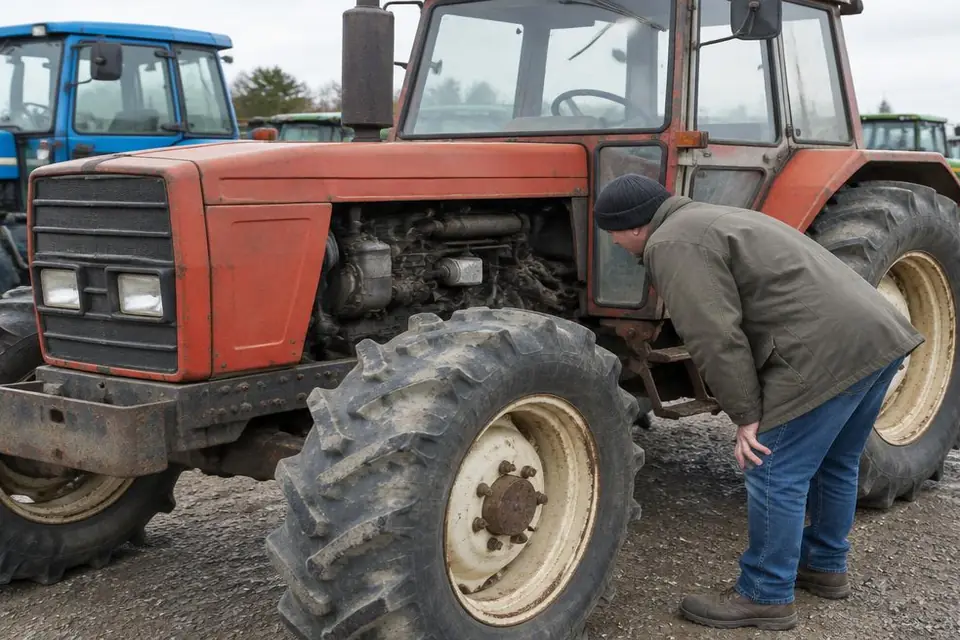
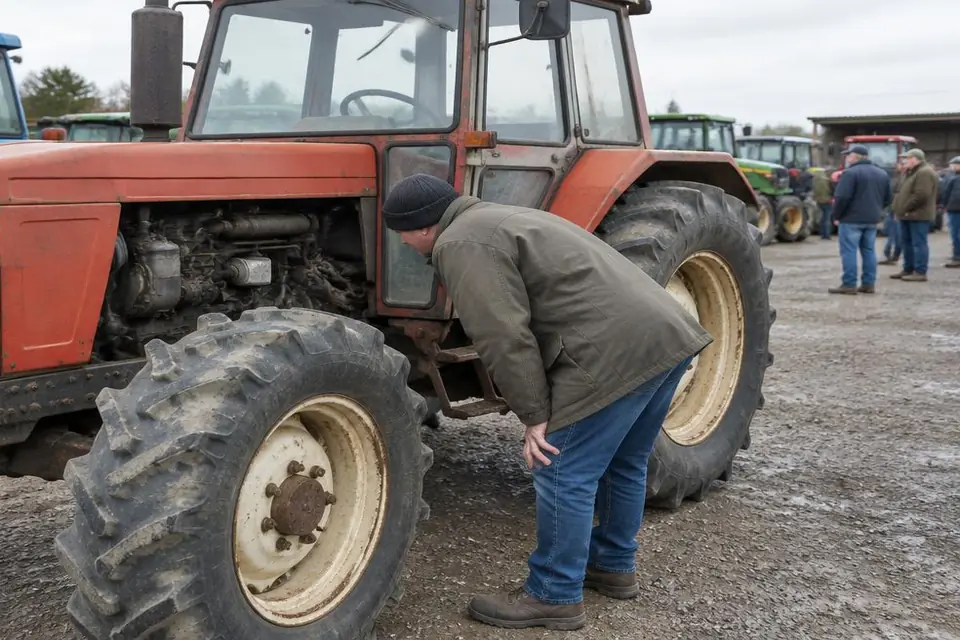
Most problems with used tractor finance start with the machine, not the paperwork. Check the hours against the service history, look for signs of heavy loader work, test the PTO, hydraulics and gearbox under load, and ask whether the tractor has been used for contracting. Confirm the serial number matches the documents. For private sales, check that nothing is still owed on the machine. If you are unsure, an independent inspection costs far less than an unexpected repair in the first season.
Dealer offers: read the whole deal
Low or zero rate dealer offers are genuine, but they are usually funded by the manufacturer and built into the overall deal. Compare the tractor price with and without the offer, check the deposit required, the term, any balloon payment and the fees. Ask whether the offer still applies if you trade in your current tractor. Sometimes a slightly higher rate on a better tractor price works out cheaper overall. Looking at the total amount you will pay is the simplest way to compare.
If your business is new or has limited accounts, read tractor finance with no accounts. For a small acreage, see financing a tractor for a smallholding.
Tractor financing explained in plain terms
Tractor financing is any arrangement that lets your business use a tractor now and pay for it over time. Instead of taking a large sum out of the bank account, you agree a set of payments with a funder. The funder buys the tractor from the dealer or seller, and you make regular payments until the agreement ends. What happens at the end depends on the type of agreement you choose.
For most farms, contractors and estates, the choice comes down to two families of finance. The first is hire purchase, where you are working towards owning the tractor. The second is leasing, where you are paying to use the tractor for an agreed period. Within leasing there are finance leases and operating leases, and each treats the end of the term differently. There is also asset refinance, which releases cash from tractors you already own.
None of these is better in every case. The right answer depends on how long you intend to keep the tractor, how many hours it will do each year, when your income arrives and how your accountant prefers to treat the cost. A good broker should explain the differences in plain language and let you decide, rather than steering you towards one product.
Why farms finance tractors rather than paying cash
Many farms could pay cash for a tractor if they had to. The reason they often choose finance is that cash has other jobs to do. Seed, fertiliser, feed, fuel, wages, rent and repairs all need paying before the next harvest or sale. A tractor is a long-lived machine that earns its keep over several years, so spreading its cost over a similar period keeps the business on an even footing. It also means a poor season or a late payment from a buyer does not leave the farm short.
Finance also brings some certainty. With a fixed-rate agreement, you know what you will pay and when. That makes budgeting easier and helps when you are talking to your bank about the overdraft or planning other investments, such as a new combine or solar panels on farm buildings.
Who provides tractor finance
Tractor finance in the UK comes from a few types of lender. Manufacturer finance companies support their own dealer networks and often fund new tractors of their brand. Specialist agricultural funders understand farming income and are often comfortable with seasonal payment patterns. High street banks offer asset finance through their own leasing divisions. Independent asset finance companies cover a wide range of machinery, including used and privately sold tractors. A broker such as Buckingham Leasing works with a panel of these funders and matches your application to the ones most likely to suit it.
Types of tractor finance compared
This section sets out each of the main tractor financing options side by side. It is a summary, so read the linked guides for more detail on any route that interests you.
| Option | Who owns the tractor | At the end | Often suits |
|---|---|---|---|
| Hire purchase | Funder until the final payment, then you | You keep it, sell it or trade it in | Farms that run tractors for many years |
| Hire purchase with a balloon | Funder until the balloon is paid, then you | Pay the balloon, refinance it or trade in | Businesses wanting lower regular payments |
| Finance lease | Funder throughout | Secondary rental, sale on the funder's behalf or return | Businesses that prefer rentals as a running cost |
| Operating lease or contract hire | Funder throughout | Hand back and replace, subject to hours and condition | Contractors who change tractors regularly |
| Asset refinance | Funder during the agreement | Ownership returns to you | Farms releasing cash from owned machinery |
Hire purchase for tractors
Hire purchase is the most common way to finance a tractor in the UK. You usually pay a deposit, then fixed payments over an agreed term. Once the last payment and any small option-to-purchase fee are made, the tractor is yours. During the agreement you are responsible for insurance, servicing and repairs, just as if you owned it. For tax, a business buying on hire purchase is usually treated as the owner, which can matter for capital allowances. Our hire purchase vs finance lease for tractors guide goes into the differences.
Balloon payments
Some hire purchase agreements put a larger final payment, called a balloon, at the end. This lowers the regular payments because part of the cost is deferred. Balloons can make sense when the tractor will still be worth a good amount at the end, and you plan to trade it in or refinance the balloon. They add risk if the tractor ends up worth less than the balloon, so set the figure conservatively. Our guide to balloon payments in asset finance explains the trade-offs.
Finance lease
With a finance lease, the funder owns the tractor and rents it to you for most of its working life. You pay rentals, usually plus VAT on each one, and you look after the machine. At the end of the main period you can often continue on a low secondary rental, or the tractor is sold and you receive most of the proceeds as a rebate of rentals. You do not become the owner. Some businesses prefer this because rentals are treated as a business expense, but your accountant should confirm how it works for you.
Operating lease and contract hire
An operating lease or contract hire is closer to a long-term rental. The funder takes the risk on what the tractor will be worth at the end, and you hand it back in agreed condition and within agreed hours. Payments can be lower than hire purchase because you are not paying off the whole value. These agreements suit contractors and large farms that change tractors every few years and do not want the job of selling old machines. Read our operating lease guide for more.
Asset refinance for tractors you already own
If you own tractors outright, or have built up equity in them, asset refinance can release cash against them. The funder buys the tractor from you, or takes security over it, and you pay it back over an agreed term while carrying on using the machine. It can help fund a new purchase, a building project or working capital, but it adds a monthly commitment, so it should be used with care.
Financing new and used tractors
Whether a tractor is new or used changes how funders view it more than almost anything else. Both can be financed, but the questions and terms are different.
New tractors
New tractors come with a clear price, a manufacturer warranty and a predictable resale curve. Funders are comfortable with them, and terms of several years are common. Manufacturer finance offers are usually aimed at new stock, so it is worth comparing those against broker options. Lead times can be long for some models and specifications, so it helps to arrange approval before ordering. If delivery is months away, ask the funder how long the approval will remain valid.
Used tractors from a dealer
A used tractor from a franchised or established independent dealer is usually straightforward to finance. The dealer can provide an invoice, serial number, hours and service history, and some offer a short warranty. The funder will consider age and hours together to set the maximum term. A younger, well-maintained tractor from a popular range can often be financed on terms close to a new one. Read used tractor finance in the UK for a closer look at what funders check.
Used tractors from a private seller
Private sales can offer good value, but funders take more care. They will want proof that the seller owns the tractor, that no finance is outstanding on it and that the identity of the machine matches the paperwork. An independent inspection may be requested on higher-value machines. The process takes a little longer than a dealer sale, so leave time and agree with the seller how payment will work. The funder normally pays the seller directly, not you.
Auction tractors
Machinery auctions move fast and usually expect payment within a day or two. Finance cannot be arranged after the hammer falls, so you need approval in principle before you bid. Agree a ceiling price with the funder based on the type and age of tractor you are looking at, and stick to it. Our guide to buying at auction or from a private sale explains how to prepare.
How age and hours affect the term
Funders generally want the agreement to finish while the tractor still has useful life and resale value. A newer tractor with low hours can support a longer term. An older tractor with high hours will usually be limited to a shorter term, which means higher payments. There is no fixed rule across the market, because each funder sets its own policy. If an older tractor is the right machine for the job, it can still be financed, but expect the term to reflect its age.
Finance by type of tractor
Different tractors do different jobs, and funders know this. The type of machine affects its resale value, the businesses that buy it and the terms that are realistic.
Compact and sub-compact tractors
Compact tractors are popular with smallholdings, equestrian yards, estates, schools, golf clubs and grounds maintenance firms. They are lower in price, which makes them easier to fund, and they hold value well in the second-hand market. Many buyers are sole traders or small businesses with modest accounts. Our compact tractor finance guide and smallholding tractor finance guide cover these buyers in detail. Browse examples such as the Kubota B Series and Kubota L Series.
Utility and livestock tractors
Mid-range utility tractors are the workhorses of livestock and mixed farms. They handle loader work, feeding, muck spreading, hedge cutting and transport. Funders like them because demand for used utility tractors is steady. Seasonal payment profiles are often less necessary on dairy farms with monthly milk cheques, but beef and sheep farms with income concentrated around sales may still benefit. See the Kubota M5091 for an example of this class, and our livestock farm finance page.
High-horsepower arable tractors
Large tractors for cultivation, drilling and heavy haulage carry high prices and do a lot of hours. Funders look closely at the size of the farm or contracting business, the acres or hectares worked and how the tractor fits the existing fleet. Seasonal payments are common for arable businesses paid after harvest. See the Kubota M7003 and our arable farm finance page.
Specialist and orchard tractors
Narrow, vineyard, orchard and specialist tractors serve smaller markets. They can be financed, but funders may ask more about their resale value and how the business uses them. A clear supplier quote and evidence of the work the tractor will do help the application. Horticulture, fruit and wine businesses should talk to us early about seasonal payment options.
Loaders, implements and attachments
Front loaders, buckets, bale handlers, hedge cutters, mowers and other attachments can often be included in the same agreement as the tractor if bought at the same time. Bought separately, they can be financed on their own. Include each item on the quote so the funder can see what is being funded. For larger implements such as drills, sprayers and balers, see our farm machinery finance guide.
Finance for popular tractor brands
Buckingham Leasing is independent of any manufacturer, so we can arrange finance on tractors of any make, whether new or used. Brand still matters, though, because it affects resale value, dealer support and the offers available.
Kubota
Kubota is strong in compact and mid-range tractors and widely used by estates, grounds care firms and smaller farms. Used Kubota tractors are in demand, which supports finance terms. Browse our machinery pages for Kubota tractors and related equipment, and see our Kubota K008-3 guide if you are also looking at compact excavators.
John Deere
John Deere has a large UK dealer network and its own finance company. Dealer offers can be attractive on new machines, so it is worth comparing them against independent finance. Our guide to John Deere tractor finance sets out what to compare.
New Holland, Case IH, Massey Ferguson, Fendt, Claas and others
All major brands can be financed, new or used. Manufacturer finance may be available through their dealers, and independent funders will finance them through a broker. Popular models with strong dealer support tend to hold value best. If you are choosing between two brands, consider dealer distance, parts availability and servicing costs alongside the price, because downtime in a busy season can cost more than any saving on the finance.
What tractor finance costs and what affects it
We do not publish rates on this page, because the cost of tractor finance depends on your business and the machine, and rates change with the wider market. What we can explain is what drives the price, so you know what to look at when comparing quotes.
What affects your rate
- The strength and trading history of the business, including accounts and bank conduct.
- The age, hours, make and model of the tractor, and how easy it would be to resell.
- The size of the deposit or part-exchange.
- The length of the term and any balloon payment.
- Whether the tractor is new or used, and who is selling it.
- The general level of interest rates, which follows the Bank of England Bank Rate over time.
Our market rates and inflation articles track the Bank Rate and inflation background so you can see how the wider picture is moving.
Total amount payable
The single most useful number when comparing tractor finance is the total amount payable. It adds up the deposit, all regular payments, any balloon, and all fees. Two quotes with similar monthly payments can have very different totals if one has a longer term, a bigger balloon or higher fees. Always ask for the total in writing.
Fees to ask about
Many agreements include a documentation fee at the start and an option-to-purchase fee at the end of hire purchase. Some include fees for early settlement or changes to the agreement. None of these should be a surprise. Ask for a full list before you sign, and check whether they are included in the figures you have been quoted.
Insurance and running costs
The funder will require the tractor to be insured for its full value, with their interest noted. You also carry fuel, servicing, tyres and repairs. These costs are not part of the finance, but they should be part of your budget. A cheap tractor with high running costs can be more expensive overall than a dearer, more reliable one.
Deposits, part-exchange and zero deposit tractor finance
Deposits are one of the most common questions we hear about tractor financing. The honest answer is that it depends, but the factors are predictable.
How much deposit is typical
Established businesses with good accounts buying a new or young tractor from a dealer can sometimes borrow most or all of the price. Newer businesses, older tractors and private sales often need more. Funders use the deposit to reduce their risk, so anything that increases risk tends to increase the deposit. There is no single figure that applies to everyone.
Using your old tractor as the deposit
A part-exchange can act as some or all of the deposit. The dealer values your old tractor and deducts that from the price of the new one. If the old tractor still has finance on it, the settlement figure is paid from the trade-in value, and only what remains counts as equity. Ask your current funder for a settlement figure early, so you know where you stand.
Zero deposit tractor finance
Some funders will finance a tractor with no deposit, usually for established businesses buying a good machine. With hire purchase, VAT on the full price is often still due at the start, so a "no deposit" deal may still need cash for VAT unless it is funded separately or the agreement is a lease. Always check how VAT is being handled before assuming there is nothing to pay up front.
Keeping a cash reserve
It can be tempting to put every spare pound into the deposit to cut the payments. We usually suggest keeping a reserve for repairs, inputs and unexpected costs. A slightly higher payment with money in the bank is often safer than a lower payment with nothing to fall back on.
Seasonal and flexible repayment profiles
Seasonal payments are one of the main reasons farms use specialist tractor finance rather than a general loan. Agricultural funders understand that income arrives in peaks, and many can shape payments around it.
Common payment patterns
- Monthly payments of the same amount, which suit farms with steady income such as dairy.
- Quarterly, half-yearly or annual payments, which can suit arable and seasonal businesses.
- Payment holidays during agreed months, with higher payments at other times.
- Stepped payments that start lower and rise as the tractor begins earning.
What funders need to see
To agree a seasonal profile, funders usually want evidence that your income follows that pattern. Bank statements showing when money arrives, accounts and a simple explanation of the farming year help. Contractors can show the timing of their main contracts. The more clearly you can show it, the easier it is to agree.
Seasonal payments and VAT
With hire purchase, the VAT is often due at the start, while with a lease it follows each rental. If you are on a seasonal profile, think about when VAT will be paid and reclaimed, because a large VAT bill in a quiet month can strain cash flow. Your accountant can help you plan this.
For a broader look at matching finance to the farming year, see our farm machinery finance guide and agricultural leasing page.
Dealer finance versus a broker: how to compare
Many tractor buyers are offered finance at the dealer's desk. It is convenient and sometimes very good value. It is also worth comparing, because the dealer can only offer what their finance partner provides.
Strengths of dealer finance
Manufacturer-backed finance can include promotional rates on new stock, and the paperwork is handled in one place. If you are buying a new tractor of that brand and the offer suits your payment pattern, it can be hard to beat.
Strengths of a broker
A broker can look at any tractor, any seller and any brand, including used and private sales. We can compare several funders, look for seasonal profiles, and help businesses that do not fit a manufacturer's standard criteria, such as newer farming businesses with limited accounts. Buckingham Leasing is a credit broker, not a lender, and we will tell you if a dealer offer is the better deal.
What to compare
- The tractor price with and without the finance offer.
- Deposit, term and any balloon payment.
- The total amount payable, including fees.
- Whether seasonal payments are available.
- Whether the offer still applies with a part-exchange.
What happens at the end of a tractor finance agreement
The end of the agreement is often overlooked when choosing finance, but it shapes the whole decision.
End of hire purchase
Once the final payment and any option-to-purchase fee are made, the tractor is yours. You can keep running it with no payments, sell it, or trade it in against a replacement. Many farms plan their replacement cycle so that a tractor is paid off just as it is due to be changed.
End of a finance lease
You usually choose between a secondary rental at a low rate, arranging the sale of the tractor and receiving most of the proceeds, or returning it. You do not take ownership. Check the end-of-term terms before signing, so you understand the options.
End of an operating lease or contract hire
You hand the tractor back, subject to agreed hours and condition, and can move to a new one. Excess hours or damage may be charged, so keep a record of use and look after the machine.
Settling early
Most agreements can be settled early by paying a settlement figure. The amount depends on the agreement and how far through it you are. Ask for the settlement terms in writing before you sign, especially if you might change tractors sooner than planned.
Who can apply for tractor finance
Tractor finance through Buckingham Leasing is for business users only. That includes sole traders, partnerships, limited companies and limited liability partnerships. Applicants must be 18 or over and based in the UK.
Established farms and estates
Businesses with a few years of accounts and steady bank conduct usually have the widest choice of funders and terms. See our arable and livestock sector pages for the range of equipment we fund.
Agricultural contractors
Contractors are assessed on the strength of their work, so contracts, customer lists and evidence of past seasons help. Read tractor lease vs buy for contractors for help deciding between ownership and leasing.
New farming businesses
New entrants, tenancies and diversification projects can be financed, though funders may ask for a larger deposit or a shorter term. Experience in farming, a sensible business plan and a good tractor help. See tractor finance with no accounts and asset finance for a new business.
Smallholdings and rural businesses
Smallholdings, equestrian centres, campsites and rural businesses often need a compact tractor. Finance is available where the tractor is used for business. Read financing a tractor for a smallholding.
Groundscare, golf and sports turf
Golf clubs, sports grounds, schools and grounds maintenance firms finance tractors alongside mowers and turf equipment. See our groundscare finance and sports leasing pages.
How to apply for tractor finance, step by step
Applying for tractor finance is usually straightforward. Here is how it works with Buckingham Leasing.
- Tell us about the tractor. Send the quote or details, who is selling it and when you need it.
- Tell us about the business. Your business name, type, how long you have traded and when your income arrives.
- We compare routes. We explain the options that suit and answer your questions.
- Application. With your agreement, we put the application to the most suitable funders.
- Approval. The funder confirms terms, which may include conditions such as a deposit or proof of ownership.
- Documents and delivery. You sign the agreement, the funder pays the seller and the tractor is delivered.
How long it takes
Straightforward applications for established businesses can be approved quickly once the information is in. Private sales, newer businesses and larger amounts take longer because more checks are needed. The best way to speed things up is to send complete information at the start. Our guide to how the finance process works has more detail.
Documents you may need
- Supplier quotation or invoice showing the tractor and any attachments.
- Recent business accounts or management figures.
- Recent business bank statements.
- Identification and address details for directors or partners.
- For used or private sales, serial number, hours and proof of ownership.
Tax, VAT and accounting points to discuss with your accountant
Tax treatment is one of the main differences between finance routes. This section sets out the general points. It is not tax advice, and your accountant should confirm what applies to your business.
Hire purchase
Businesses buying on hire purchase are usually treated as the owner for tax purposes and may be able to claim capital allowances on the tractor. VAT on the price is usually paid at the start and may be reclaimable by VAT-registered businesses. Interest is generally treated as a business cost.
Leasing
With a lease, the rentals are generally treated as a business expense and VAT is charged on each rental. The funder, as owner, claims the capital allowances. Some businesses prefer this because the cost is spread evenly through the accounts.
Where to check
HMRC publishes guidance on capital allowances and VAT on its website. The rules change from time to time, so check the current position before making a decision. Our hire purchase versus finance lease guide sets out the general differences.
Mistakes to avoid when financing a tractor
- Agreeing a price before knowing whether finance is available, especially at auction.
- Looking only at the monthly payment and ignoring the total payable.
- Choosing a term longer than the tractor's useful working life.
- Forgetting the VAT due at the start of hire purchase.
- Setting a balloon payment higher than the tractor's likely value.
- Not checking for outstanding finance on a privately sold tractor.
- Putting all spare cash into the deposit and leaving no reserve.
- Not asking for the settlement terms before signing.
- Ignoring dealer distance and parts support when choosing a brand.
Most of these are avoided by asking questions early. If anything is unclear, get in touch and we will explain it.
Tractor finance across Buckinghamshire and the UK
Buckingham Leasing is based near Buckingham and arranges tractor finance for businesses across the UK. Many of our customers are in the surrounding counties, and our local pages explain finance for businesses in those areas.
- Asset finance in Oxfordshire, including tractor finance for Oxfordshire farms.
- Asset finance in Buckinghamshire.
- Asset finance in Aylesbury, including farm machinery finance.
- Asset finance in Northampton.
- Asset finance in Bedford.
- Asset finance in Banbury.
See all areas on our Local Asset Finance page.
Why farms and contractors use Buckingham Leasing
We have worked with farms, contractors, estates, golf clubs and grounds maintenance firms for many years. We understand farming income, seasonal work and the machines you rely on. We are authorised and regulated by the Financial Conduct Authority as a credit broker, and we work with a panel of funders rather than a single lender.
We aim to give straight answers quickly, explain the options in plain English and only move forward when you are ready. You can read case studies, learn more about us or browse our finance products. If you are new to equipment finance, start with what asset finance is.
Related farm finance guides
- Farm machinery finance
- Combine harvester finance
- Agricultural mortgage vs asset finance
- Robotic milking parlour finance
- Solar panel finance for farms
- Asset finance vs a bank loan
Quick answers on tractor financing
What is tractor financing?
Tractor financing is a way for a business to spread the cost of a tractor over an agreed term, usually through hire purchase or leasing, instead of paying the full price up front.
Can I finance a used tractor?
Yes. Used tractors from dealers, private sellers and auctions can be financed. The age, hours and condition of the tractor affect the term and deposit.
Can tractor finance payments be seasonal?
Often, yes. Many agricultural funders can set quarterly, half-yearly or annual payments, or payment holidays, where your income follows a seasonal pattern.
Is dealer finance or broker finance better?
Neither is always better. Dealer offers can be good on new stock of one brand. A broker can compare several funders and cover any tractor and seller. Compare the total amount payable.
Do I own the tractor at the end?
With hire purchase, yes, once the final payment and any option fee are made. With a lease, the funder owns it and you choose from the end-of-term options in the agreement.
Can a new farming business get tractor finance?
Yes, in many cases. Funders look at experience, the business plan, the deposit and the tractor. A larger deposit or shorter term may be asked for.
Tractor finance for agricultural contractors
Contractors are among the heaviest users of tractor finance. Their machines work long hours across many farms, and the business depends on having reliable kit ready for each season. That changes how finance should be set up.
Matching finance to contracts
A contractor adding a tractor for a new contract should think about how long that contract runs and how likely it is to be renewed. If the work is secure for several years, hire purchase over a similar period can make sense. If the work is less certain, a shorter term or a lease with clear end options may reduce risk. Funders will often ask to see contracts, letters of intent or a list of regular customers, so keep these to hand.
High hours and replacement cycles
Contracting tractors can build hours quickly. That affects resale value and the condition of the machine when it is changed. Many contractors replace main tractors on a regular cycle so that warranty cover and reliability stay high. Finance can be timed so that each agreement ends just as the tractor is due to be replaced, with the trade-in value forming part of the deposit on the next one. Operating leases are worth considering where the business would rather hand machines back than sell them.
Fleet finance
Contractors with several tractors, trailers and implements often benefit from looking at the whole fleet together. Staggering agreements avoids a year where several large payments or replacements land at once. We can review existing agreements alongside a new purchase and suggest how to keep the fleet on an even footing. See tractor lease vs buy for contractors for more on this.
Planning tractor replacement on a farm
Most farms run a small fleet of tractors, each with a different job. Planning when to replace each one makes finance simpler and keeps repair bills under control.
Signs a tractor is due for replacement
- Repair costs are rising each year and becoming hard to predict.
- The tractor is unreliable at busy times, causing lost work or hire costs.
- Parts are getting harder to find or take longer to arrive.
- The tractor no longer matches the size of implements or the scale of the farm.
- Its value is falling to the point where trading it in soon would be worthwhile.
Spreading replacements over time
Replacing the main tractor, loader tractor and combine in the same year can create a heavy load of payments and VAT. Spreading them across different years keeps cash flow smoother. When one agreement ends, the next replacement can be planned with the trade-in value in mind. Our guide to financing a machinery replacement cycle on an arable farm looks at this in more detail.
Keep, sell or trade in
When a tractor is paid off, it can be tempting to keep it as a spare. That can be useful, but it also means extra insurance, servicing and storage. If it will rarely be used, selling or trading it in may give better value. Work out what the old machine really costs to keep before deciding.
Finance for tractor technology, GPS and newer power options
Modern tractors increasingly come with guidance systems, telematics, section control and precision farming equipment. These can be financed along with the tractor or added later.
GPS guidance and precision farming
Guidance systems, receivers, displays and correction subscriptions can often be included in the tractor agreement if bought at the same time. Separately bought kit can usually be financed on its own. Subscriptions for correction signals or software are usually a running cost rather than something funders will finance, so check what is included in the quote.
Telematics and data
Many new tractors record hours, fuel use and location. That data can help with servicing, fleet planning and proving use for leases. It can also be useful evidence when you apply for finance on the next machine.
Alternative fuels and electric tractors
Manufacturers are developing tractors that run on alternative fuels and electric power, particularly in compact sizes. Funders will consider these, though resale values are less established than for conventional diesel tractors, which may affect terms. If you are considering one, talk to us early about the options.
Insurance, maintenance and looking after a financed tractor
A financed tractor is your responsibility to look after, whether it is on hire purchase or a lease.
Insurance
The funder will require the tractor to be insured for its full replacement value, with the funder's interest noted on the policy. Check your farm policy covers it for road use, the type of work it will do and any operators. Tell your insurer before delivery so cover is in place from day one.
Servicing
Keeping to the manufacturer's service schedule protects your warranty and the value of the tractor. For leases, the agreement may set out maintenance requirements and return conditions. For hire purchase, a full service history helps when you come to trade it in.
If something goes wrong
If the tractor is stolen, written off or badly damaged, tell the funder and your insurer straight away. Insurance proceeds are usually used to settle the agreement first. If your circumstances change and you struggle to make payments, contact the funder early. Funders are generally more able to help when they hear about problems sooner rather than later.
Tractor finance checklist before you buy
- Decide what job the tractor needs to do and what size and specification it needs.
- Decide whether you want to own it long term or change it regularly.
- Know when your income arrives during the year.
- Get a written, itemised quote including attachments, delivery and VAT.
- For used tractors, check hours, history and serial number.
- For private sales, confirm ownership and that no finance is outstanding.
- Get a settlement figure for any tractor you are trading in.
- Compare the total amount payable, not just the monthly figure.
- Check how VAT will be handled and when it is due.
- Arrange insurance before delivery.
- Ask your accountant about tax treatment.
Regulation and how we work
Buckingham Leasing Limited is authorised and regulated by the Financial Conduct Authority. We act as a credit broker, not a lender, and we work with a panel of funders. Finance is for business users only and is subject to status and credit acceptance. Applicants must be 18 or over and UK based. We may receive a payment from the funder if you enter into an agreement, and we will tell you about this if you ask.
You can check our details on the FCA Register. Read more in our frequently asked questions.
Tractor finance glossary
- Balloon payment: a larger final payment that lowers the regular payments.
- Deposit: the amount paid at the start, in cash, part-exchange or both.
- Finance lease: a lease where the funder owns the tractor and you pay rentals for most of its working life.
- Hire purchase: an agreement where you own the tractor after the final payment.
- Operating lease: a rental where the funder takes the risk on the tractor's end value and you hand it back.
- Option-to-purchase fee: a small fee paid at the end of hire purchase to take ownership.
- Part-exchange: trading in your current tractor against the new one.
- Refinance: releasing cash against machinery you already own.
- Seasonal payments: payments set to follow when your income arrives.
- Settlement figure: the amount needed to end an agreement early.
- Total amount payable: everything you will pay over the agreement, including deposit, payments, balloon and fees.
For more terms, see our knowledge base.
Tractor finance for estates, equestrian yards and rural diversification
Not every tractor is bought by a working farm. Estates, equestrian centres, campsites, wedding venues, shoots, woodland businesses and rural property managers all rely on tractors for mowing, grass care, arena work, track maintenance, snow clearing and moving materials. Finance works in much the same way for these businesses, but a few points are worth knowing.
Showing business use
Finance through Buckingham Leasing is for business use, so funders will want to understand how the tractor supports the business. An estate might use it for grounds and woodland work. An equestrian yard might use it for muck, arena grading and haylage. A holiday park might use it for grass cutting and site maintenance. A short explanation of how the tractor earns its keep helps the application.
Diversification projects
Farms adding a new enterprise, such as a farm shop, glamping site, contracting arm or energy project, often need extra machinery at the same time. Funders look at the existing farm business as well as the new venture. A simple plan for the new enterprise and realistic income figures help. For energy projects, see our solar panel finance for farms guide.
Compact tractors with attachments
Rural businesses often buy a compact tractor with a front loader, mower deck, topper or flail. Including the attachments on the same quote keeps everything in one agreement. Compact tractors from popular ranges hold their value well, which helps with terms. See our compact tractor finance guide.
What to expect when you talk to us about a tractor
When you get in touch, one of our team will ask a few simple questions about the tractor and your business. We will explain the routes that fit, set out the total cost clearly and answer anything you are unsure about. There is no obligation to proceed, and we will only put an application forward with your agreement. If a dealer offer is better than what we can find, we will say so.
Most customers find it easiest to send the quote or a link to the tractor, along with a rough idea of when their income comes in. From there, we can usually tell you quickly which options are realistic. Send us your tractor details or call the team to talk it through.
If you are still at the early stage and simply want to understand your tractor financing options before speaking to a dealer, that is fine too. Many of our conversations start with a farmer or contractor wanting to know what is realistic before they start shopping. Knowing roughly what deposit, term and payment pattern would suit your business puts you in a stronger position when you negotiate the price of the tractor itself. It also means that when the right machine comes up, whether at a dealer, a private sale or an auction, you can move quickly with confidence that the finance is in place. We would rather help you plan properly than rush a decision, because the right tractor on the wrong finance can be a burden for years, while the right finance makes a good machine even better value.
Frequently asked questions
How much deposit is normally needed?
There is no fixed deposit for every proposal. The amount depends on the applicant, asset, supplier and term. A contribution may strengthen the case, but it should not leave the business short of cash for VAT, insurance, operation or an unrelated setback.
Can a new business apply?
Yes, a new business can be considered. The assessment may rely more heavily on relevant experience, opening capital, contracts, forecasts, bank conduct and personal credit. A clear explanation of the purchase and realistic repayment capacity is particularly important where full trading accounts are not yet available.
Can used equipment be financed?
Many funders consider used equipment when its age, condition, provenance and price are sensible. The available term may be shorter than for new equipment. Service records, serial details, photographs and an inspection can help establish that the asset remains useful and saleable.
How quickly can approval be arranged?
A straightforward proposal can move quickly once the quote, business information and identification are complete. A private sale, auction, complex ownership structure or installed project takes longer. Starting early allows time for checks and documents without putting the purchase under avoidable pressure.
Can payments follow seasonal income?
Monthly payments are common, but quarterly, seasonal or stepped profiles may be considered where the trading evidence supports them. The payment pattern must be agreed before documents are issued. A seasonal profile changes timing, not the need for the whole agreement to remain affordable.
Can the agreement be settled early?
Most agreements have an early-settlement process under their written terms. The funder calculates a settlement figure rather than simply adding the remaining payments. Ask how settlement works before signing if sale, replacement or refinance during the term is a realistic possibility.
What happens to VAT?
VAT depends on the product and transaction. Hire purchase commonly requires VAT on the full supply near the start, while leasing normally charges VAT with each rental. Recovery depends on the business and use. Confirm the exact timing and eligibility with your accountant.
Is Buckingham Leasing the lender?
Buckingham Leasing is a finance broker, not a lender. We gather the proposal, explain potential structures and introduce suitable applications to funders. The chosen funder makes the credit decision and provides the final agreement, terms and settlement rights.
A sensible next step
What to send us
To get a clear answer quickly, send us the tractor details or quote, who is selling it, your business name and type, roughly how long you have been trading, and when you would like payments to fall during the year. If you are trading in a machine, include its details and any outstanding finance. We will come back with the routes that suit, explain the differences in plain terms and only move to a full application when you are ready.
Choosing between your tractor financing options
If you want to own the tractor and run it for many years, hire purchase is usually the starting point. If you change tractors regularly or want lower, predictable payments with a planned exit, a lease may suit. If you already own machinery outright and need to release cash, asset refinance can sometimes help. Whatever the route, the agreement should match how long the tractor will earn its keep, and the payments should match when your money comes in.
Ready to talk it through? Send us your tractor details or read what asset finance is if you are new to it.
Related reading
- Used Tractor Finance Uk
- Finance Second Hand Tractors Auction
- New Farming Partnership Machinery Finance
- used tractor finance UK
Buckingham Leasing Ltd is a finance broker, not a lender. Finance is subject to status and approval. Business users only. Applicants must be aged 18 or over and based in the UK. All monetary figures are illustrative examples, not quotations, tax advice or financial advice. Tax and VAT treatment depends on individual circumstances and may change. Confirm the position with your accountant.
Related reading