Guides
End of Lease Options: What Happens When the Term Finishes
On hire purchase, ownership passes to the business once all payments and any option-to-purchase fee are made. On a finance lease, the business can usually extend into a secondary period at a nominal rental or sell the asset as the funder's agent. On an operating lease or contract hire, the asset is returned in agreed condition, subject to charges for excess use or damage.
In this article
- Hire purchase: ownership and the option fee
- Finance lease: extend, sell or hand back
- Operating lease and contract hire: the return inspection
- Replacing the asset at the right moment
- Refinancing rather than replacing
- A twelve-month countdown to the end of term
- Understanding early settlement figures
- Getting the best result when you sell
- Rolling into the next agreement
- Useful independent sources
- Related reading
- Frequently asked questions
- Do I own the equipment at the end of hire purchase?
- What is fair wear and tear on a returned asset?
- Can I keep using equipment after a lease ends?
- How do I get an early settlement figure?
- The next step
What happens at the end of an asset finance agreement?
On hire purchase, ownership passes to the business once all payments and any option-to-purchase fee are made. On a finance lease, the business can usually extend into a secondary period at a nominal rental or sell the asset as the funder's agent. On an operating lease or contract hire, the asset is returned in agreed condition, subject to charges for excess use or damage.
The end of the term is the part of an agreement people read last and regret first. Return conditions, settlement formulas and secondary rentals are all set out at the start, but they only become real years later. This guide walks through each ending, the money involved and the steps to take three months before the final payment.
This article supports our longer pillar guide, what asset finance is and how it works, which covers the whole subject from definitions to end of term.
Hire purchase: ownership and the option fee
Once every instalment is paid and the option-to-purchase fee has been settled, title passes to the business. Ask the funder for written confirmation and keep it with the asset records, because it matters at resale and at audit.
Settling early is normally possible. Ask for a settlement figure in writing; it should reflect a rebate of future charges, and the calculation basis should be stated in the agreement.
Finance lease: extend, sell or hand back
At the end of the primary period, many finance leases offer a secondary period at a small annual rental, which suits a business that wants to keep using an asset it does not need to own. Alternatively, the asset can often be sold to a third party with the business acting as the funder's agent and retaining an agreed share of the proceeds.
Read the rebate share and any minimum charge. On well-maintained machinery the sale route often produces the better result, because the market price for a tidy, serviced machine with records is materially higher than for one with gaps.
Operating lease and contract hire: the return inspection
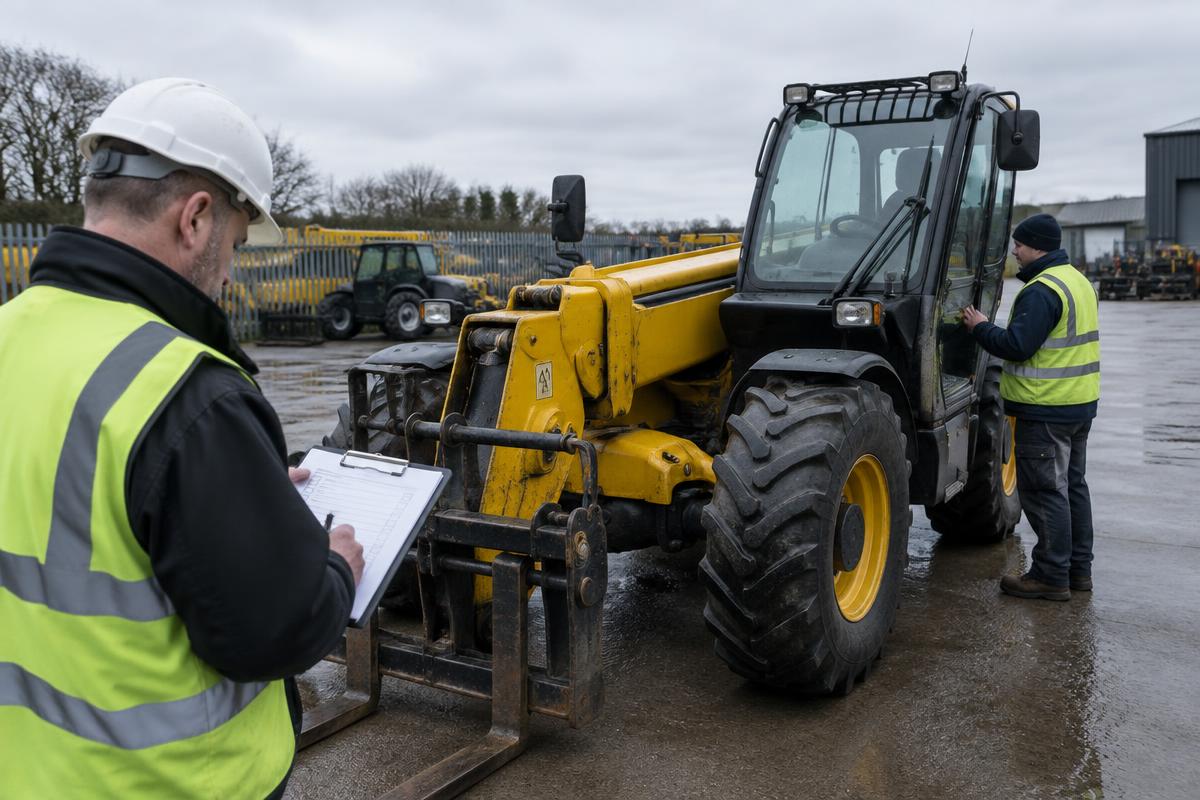
Returns are assessed against a fair wear and tear standard, plus hour or mileage limits. Typical charges arise for damage beyond the standard, missing attachments, missing service history and excess use.
Three months before return
- Request the return condition guide and read it against the actual asset
- Book any outstanding servicing and collect the records
- Repair small damage yourself, where doing so costs less than the schedule charge
- Check hours or mileage against the contracted limit and ask about the excess rate
- Photograph the asset on collection day and keep the collection note
The photographs matter. Most return disputes come down to what condition the asset was in when it left your yard.
Replacing the asset at the right moment
The end of an agreement is the natural point to decide whether the same machine still suits the work. Three questions help: has the workload changed, has downtime or repair cost risen, and is a current model materially more efficient?
If replacement makes sense, start the conversation about a month before the final payment. Supplier lead times, not funding, are usually the constraint, and a gap between handing one machine back and receiving the next costs real money.
Refinancing rather than replacing
Where a business owns machinery outright, capital can be released against it through asset refinance instead of borrowing unsecured. That can be useful at the end of a cycle, funding a deposit on the next machine without draining the current account. It also adds a commitment, so it should be used for a defined purpose rather than to plug a recurring gap.
A twelve-month countdown to the end of term
The businesses that do best at the end of an agreement start thinking about it a year out, not a month.
Twelve months before: review whether the asset still matches the work. Check hours or mileage against the contracted limit and project where you will land.
Nine months before: if replacement is likely, check supplier lead times. On some machinery, lead times have been the binding constraint rather than funding.
Six months before: request the return condition guide or, on hire purchase, confirm the option fee. Start any deferred servicing.
Three months before: get a written settlement or extension figure. Obtain a second-hand valuation if you may sell.
One month before: arrange collection or delivery timing so you are never without a working machine, and photograph the asset's condition.
That timeline costs nothing and removes almost every unpleasant surprise from the process.
Understanding early settlement figures
Settling early does not simply mean paying the remaining instalments. A properly calculated figure reflects a rebate of future finance charges, so the total is less than the sum of the payments left. The method should be set out in the agreement.
Three things to check on any settlement quote: the date the figure is valid until, whether the option-to-purchase fee is included, and whether VAT applies to any element. On a lease, also ask whether settlement gives you any rights over the asset, because often it does not, and paying to end a lease early is not the same as buying the machine.
Early settlement usually makes sense when refinancing several agreements into one, when selling the asset at a good price, or when the business has surplus cash and wants to remove a commitment. It makes less sense purely to feel debt free if that leaves the account short.
Getting the best result when you sell
Where the structure lets you sell the asset, the difference between a careless and a careful sale is often thousands of pounds.
- Present the machine clean, with a full service history and any manuals.
- Repair small cosmetic damage; the cost is usually recovered several times over.
- Get two or three valuations, including a dealer and an auction estimate.
- Time the sale to the season. Agricultural and groundscare machinery sells better before its working season than after it.
- Confirm in writing what share of the proceeds you retain, and who pays the disposal costs.
Keep the funder informed. Selling an asset the funder owns without following the agreed process creates a serious problem, even where everyone's intentions are good.
Rolling into the next agreement
Most businesses do not stop at one agreement. The end of a term is the natural moment to review the whole equipment plan rather than replace one machine in isolation.
Useful questions: which machines are costing the most in downtime, which agreements end in the next eighteen months, and could two or three replacements be planned together to improve buying power and simplify administration? A schedule of every agreement, with end dates, settlement positions and asset ages, is a small piece of work with a long payback.
If that schedule shows several agreements ending together, plan ahead, because replacing three machines in the same quarter puts real pressure on cash and on supplier lead times. Staggering renewals deliberately is one of the simplest improvements a growing business can make. Speak to Buckingham Leasing if you would like help building that plan.
Useful independent sources
These organisations publish the underlying rules and market information referred to above.
- Financial Conduct Authority register: check that any broker or lender holds the permissions it claims.
- Finance and Leasing Association: UK asset finance market data and the industry lending code.
- National Association of Commercial Finance Brokers: broker standards and member directory.
- GOV.UK capital allowances: what qualifies and how relief is claimed.
- Bank of England Bank Rate: the policy rate that influences funders' cost of money.
- British Business Bank finance hub: impartial guidance on business funding options.
Related reading
- What is asset finance? The complete UK guide
- Equipment Leasing in the UK: A Practical Guide
- Asset Finance and Tax: What UK Businesses Should Understand
- How the application process works
- Asset finance glossary
Frequently asked questions
Do I own the equipment at the end of hire purchase?
Yes, once all payments and the option-to-purchase fee are made. Ask for written confirmation of title.
What is fair wear and tear on a returned asset?
It is the level of deterioration expected from normal use over the term, set out in the funder's return condition guide. Damage beyond that standard is usually chargeable.
Can I keep using equipment after a lease ends?
Often yes, through a secondary period at a nominal rental on a finance lease, or by agreeing an extension on other lease types.
How do I get an early settlement figure?
Ask the funder in writing. The figure should reflect a rebate of future finance charges calculated on the basis set out in your agreement.
The next step
Send the supplier quotation, the delivery date and a short note on how the asset will be used. Buckingham Leasing can then set out the realistic structures and approach suitable funders. Facilities from £5,000 to £5 million are considered, subject to status. Speak to the team or read more in our asset finance guide.
Finance disclosure: Buckingham Leasing Ltd is a finance broker, not a lender. Finance is subject to status and approval. Business users only. Applicants must be aged 18 or over and based in the UK. Figures are illustrative and are not quotations, tax advice or financial advice. Tax and accounting treatment depends on individual circumstances and may change.